


Developers invest significant time in refining gameplay mechanics and creating engaging player experiences. However, a game’s long-term success depends on more than attracting players at launch. Ultimately, mastering game design for retention is the true challenge of giving those players a compelling reason to return.
This is particularly important in browser gaming, where players can access games instantly without downloads or installations. While this accessibility makes it easier to attract new audiences, it also means players can leave just as easily.
For developers, player retention starts with the core gameplay experience. Engaging mechanics, rewarding progression, and well-designed gameplay loops are essential to encouraging repeat sessions and building a loyal player base.
The difference between a game that experiences a brief spike in traffic and one that achieves sustainable growth often comes down to the design decisions made early in development.
It All Starts With the Core Gameplay Loop
Every good game relies on a simple, repeating cycle known as a core loop. You do a task, get a reward, and repeat. It is the emotion behind this core loop that keeps players engaged.
When players beat a tough challenge, they feel a great sense of relief. However, if that moment feels like a good time to quit, you have lost them. You never want players to feel completely finished. Instead, always show them an exciting new goal right away.
Vex 10, for example, achieves this by replacing static menu screens with an interactive level hub, dropping players directly back into an overworld where the entrance to the next Act is immediately visible.
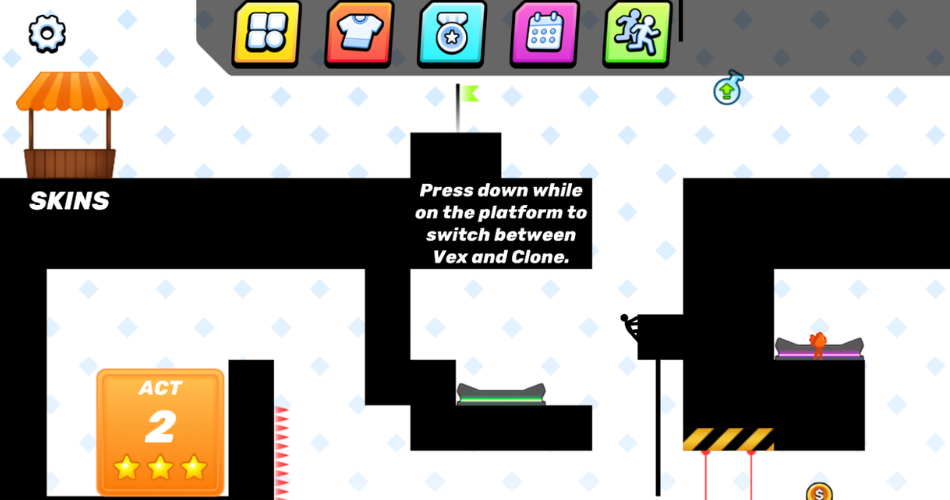
“The moment a game shows you a static ‘Level Complete’ screen with a solitary ‘Next’ button, you’ve handed the player an exit ramp. What makes Vex 10 an absolute textbook example of retention-driven design is how seamlessly it manages momentum.” — Calvin Man, Head of Content and Monetization at GameDistribution
For web games, this core loop must be extremely fast. People usually play browser titles during very short breaks. So, they need to complete a loop in just a few minutes. Furthermore, web players hate waiting. Therefore, slow loading screens or long pauses will instantly kill your game.
Games like Moto X3M Spooky Land actively avoids this drop-off risk with a near-zero friction checkpoint system. When players explode on a deadly trap or misjudge a flip, the game instantly respawns them at the most recent checkpoint within milliseconds.
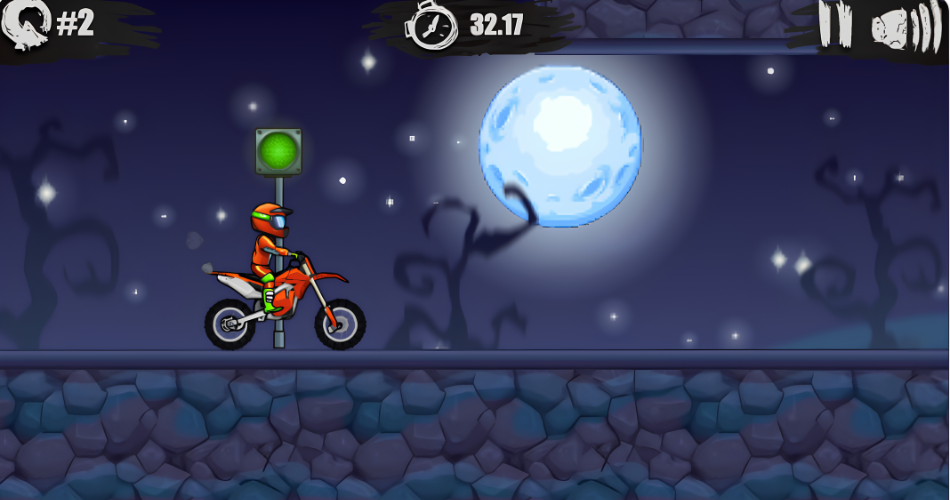
“Tension management is about what happens the millisecond after you fail or succeed. In Moto X3M Spooky Land, if you miscalculate a flip and explode on a bone saw, there’s zero penalty time — you’re instantly back at the checkpoint before your brain even registers the urge to quit.” — highlights Calvin.
A Good Game Tutorial Is Key for Player Retention
The numbers do not lie. Most players quit a game on their very first day. In fact, an average game only keeps about 23% of its players after Day 1. On the other hand, hit games keep up to 40%. Why is there such a huge gap? It almost always comes down to the player’s very first few minutes.
The biggest mistake is throwing too much information at the player all at once. Naturally, developers want to explain how everything works. So, they build long tutorials before the real game even starts. However, this usually backfires. Players do not want to read a manual. Instead, they just want to jump in and learn by playing.
A much better approach for game tutorials is to teach step-by-step. First, introduce just one simple mechanic.
For example, The Mergest Kingdom avoids heavy text walls for its complex simulation systems and instead asks the player to execute a single, intuitive action: dragging three basic sprouts together to merge them into a wheat crop.
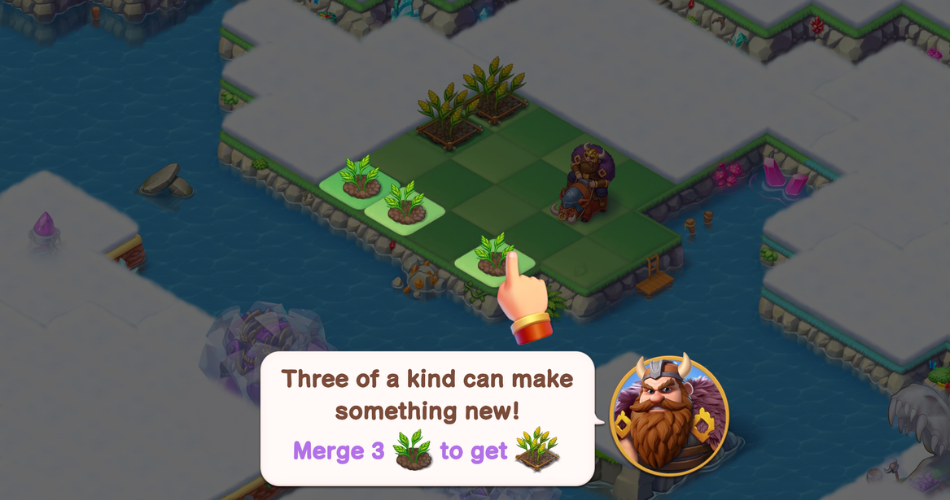
Next, let the player try it out safely and succeed. Once the player experiences this immediate visual reward, the game gradually introduces secondary systems — like harvesting and clearing fog — one piece at a time.
Finally, give them a real challenge where they must use that new skill. Introduce each new mechanic only after the player has successfully demonstrated mastery of the previous step. This cycle makes players feel smart.
Ultimately, that feeling of mastering the game is exactly what keeps them coming back.
“If you drop a three-page text pop-up on a web player in their first ten seconds, they aren’t going to read it. They’re going to close the tab. The Mergest Kingdom handles onboarding brilliantly because it respects the player’s cognitive bandwidth. By teaching through micro-actions rather than instructions, it builds genuine player mastery without ever feeling like homework.”
Tease the Next Session to Hook Your Players
Fixing the first few minutes of gameplay is only half the battle. You also need to make the player’s next session feel guaranteed. To do this, you must give them a sneak peek of what is coming next.
Before a player closes your game, they should always see an unfinished goal. For example, this could be a locked level, a new high score to chase, or one missing piece of a collection.
In Commando Force 2, this is achieved by surrounding tactical matches with open loops, such as a $5,000 sniper rifle visibly locked in the shop or a 7-day daily reward tracker culminating in an exclusive weapon.
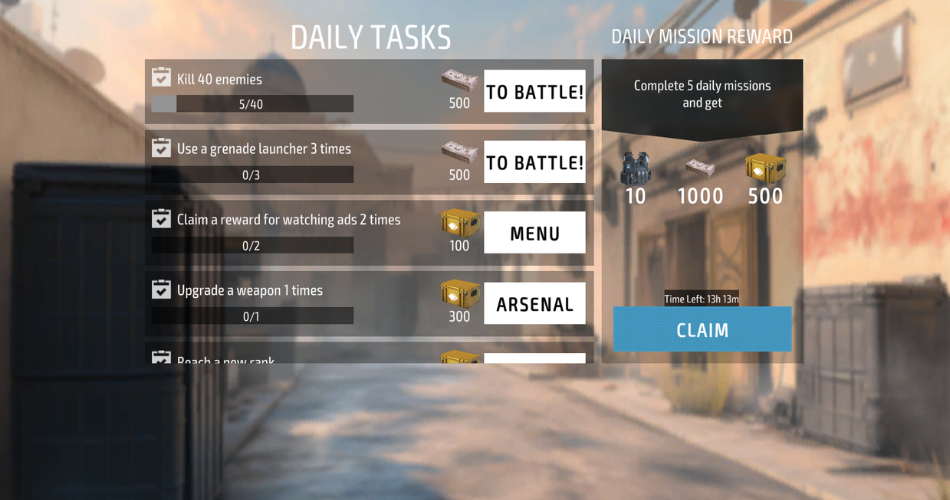
Essentially, these act like natural cliffhangers. They give players a solid reason to return before they even decide to stop playing.
When a match ends in Commando Force 2, players are able to see exactly how much cash they earned toward their next gun upgrade, ensuring that stepping away feels like pausing mid-journey rather than finishing a task.
At the same time, you must handle losing very carefully. Success should feel possible, but never guaranteed. If a game is too easy, winning feels boring. On the other hand, if it is too hard, players just feel punished. Ultimately, the perfect loss leaves the player thinking, “I know exactly what to do differently next time.”
“If a player logs off feeling completely ‘done,’ you’ve failed the retention test. What Commando Force 2 gets right is that every match end-screen actively plants a seed for tomorrow’s session. By visibly teasing locked weapons, Battle Pass tiers, and daily streaks right before the user closes their browser tab, the game creates a classic cognitive itch. You don’t leave feeling finished. You leave with a mental plan for what you’re going to unlock the moment you come back.” — says Calvin.
Technical Performance Also Enhance Player Retention
Finally, technical performance is critical in web games, as how smoothly a game runs directly influences player behavior.
Games that load in under three seconds naturally keep more players and make more money. After all, browser players haven’t paid anything or waited for a long download. Therefore, a slow loading screen gives them a perfect reason to leave immediately.
Smooth controls are just as important. When a game reacts instantly, it actually generates more money per session than a laggy competitor. Furthermore, players use everything from cheap budget phones to high-end PCs. Making sure your game runs beautifully on all devices is the absolute best way to keep players around.
Key Takeaways for Developers and Publishers
Sustaining a web game’s success comes down to aligning smart game design for retention with smart distribution. Whether you are building a new title or managing a huge catalog, turning casual clicks into daily habits relies on a few practical priorities.
For developers, keeping players around means focusing on fast sessions and active learning. You should design quick gameplay cycles that fit perfectly into short breaks. Furthermore, always make sure the next milestone is visible before a player closes the tab. When introducing new mechanics, skip the heavy tutorials. Instead, let players learn by doing, giving them immediate wins builds crucial confidence in those first few minutes.
Naturally, game balance and technical performance are just as crucial. You must make losing feel fair, ensuring players know exactly what to try next time. At the same time, treat load times and smooth controls as core gameplay features. After all, browser players have not waited for a download. Therefore, a load screen over three seconds will cause instant drop-offs on any device.
Finally, for publishers, the priority should always be deep engagement rather than just chasing raw clicks. Games with strong return rates naturally deliver longer sessions, higher ad viewability, and much better lifetime value. By pairing these well-designed games with daily challenges and seasonal events, platforms can easily transform casual visitors into a highly loyal audience.