

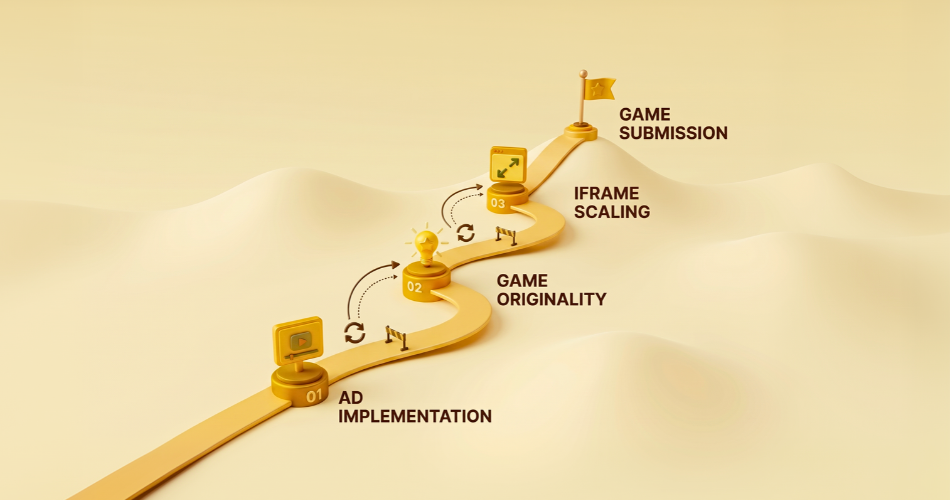

At GameDistribution, three issues show up regularly in organic submissions: ad implementation, similarity to existing games, and iframe scaling. Here is where game development most often goes wrong and how to fix them.
1. Ad implementation: test the full interaction
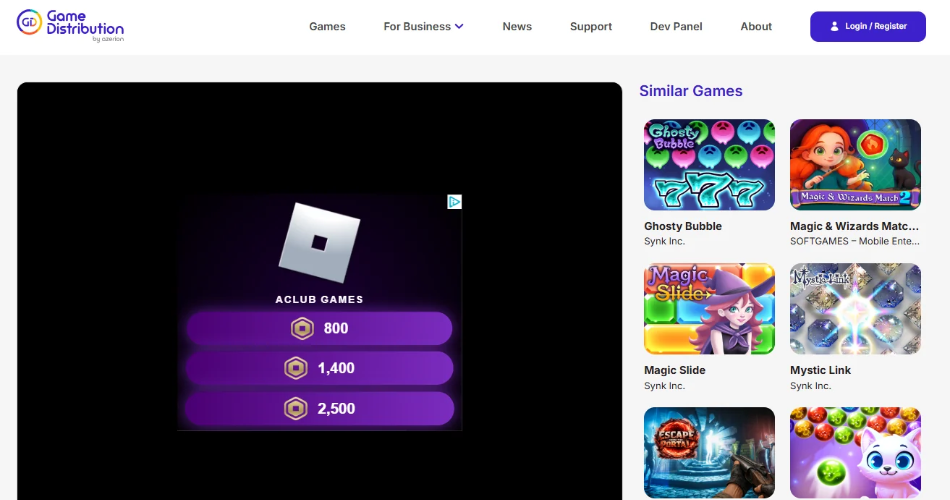
Ads are the problem our Content team flags most often in the game QA. Some games miss pre-roll or mid-roll placements. Others show the first mid-roll too late, keep the gameplay running while an ad plays, or handle rewarded ads incorrectly.
Getting an ad to appear is only the start. Everything around it needs checking too.
Gameplay timing: place the first mid-roll early
A developer who knows the levels well will usually reach an ad trigger much faster than a first-time player. Playing a short session at a beginner’s pace quickly reveals whether the first mid-roll arrives early enough. If it sits too far into the experience, many players leave before they ever see it.
Natural breaks such as the end of a round or a restart are good places for extra triggers, and we encourage developers to implement as many triggers as they can. Each trigger creates an opportunity to request an ad. Our in-game timer controls how often ads appear, so players won’t be spammed no matter how many triggers you add.
More triggers = more ad requests = more impressions = more REVENUE.
Pausing and resuming correctly
Gameplay systems and sound should pause during ads and resume cleanly afterward. Progress needs to stay consistent, controls should still work, and audio must return as expected. Overlapping sounds appear often in QA reports, with music continuing under an ad or a second track starting when play resumes.
Rewarded ads
When a game offers a reward such as an extra life for watching an ad, that reward should be granted once and only after the SDK confirms a qualifying completion. Cases where an ad is unavailable, cancelled, or fails also need testing so the player can still continue.
2. Game Originality: how to make a game stands out
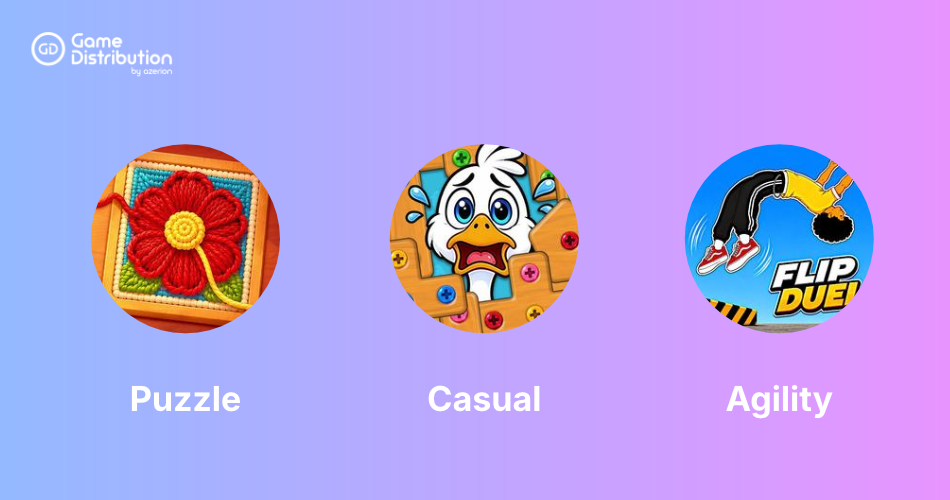
Many submissions arrive with styles and mechanics that closely match games already in the catalogue. Building a new take on an existing game is a fine starting point, but most of these games are low quality copies of existing games. Without a unique angle, they have very little chance of succeeding.
Checking the catalogue & keeping eye on trends
Exploring comparable titles in the GameDistribution catalogue early in game development highlights which ideas appear repeatedly and which experiences remain less common. The Content team actively looks for unique ideas and gaps in the catalogue.
It also helps to keep an eye on gaming trends, such as what’s popular on Roblox, hit games on other platforms, or pop culture moments. A game that taps into something fresh tends to stand out far more than a reskin of a game that has been popular for years.
Game development test
A useful test is to sum up the game’s contribution in one sentence: for players who enjoy a certain type of experience, this game offers a specific difference. If that sentence could apply to many existing titles, the concept or the way its strongest feature is presented may need sharpening.
Make your thumbnail stand out
Thumbnails matter too. Even if a game belongs to a saturated genre, a unique and creative thumbnail can help it get picked up more often.
With more developers turning to AI for visuals, audiences are getting better at spotting it, and the negative reaction is stronger than many expected. AI-generated thumbnails can make a game feel low-effort, so it’s best to avoid them, along with copies of existing assets, and create original artwork that shows what makes your game different.
3. Iframe scaling: keep the whole experience usable
A development window is familiar territory. Publisher sites often display games at different dimensions and proportions, which can lead to cropped instructions, overlapping menus, or buttons that sit outside the visible area.
Responsive game development
Responsive scaling must cover the entire UI interface, including navigation, scores, restart controls, and rewarded-ad options. Controls and buttons are another frequent QA issue and need to remain visible, responsive, and practical at smaller sizes.
Testing in real conditions
Testing the uploaded build through its review link, resizing during a round, opening menus, and checking supported orientations shows how the game behaves in real conditions. A start screen that scales correctly does not automatically mean later screens will do the same.
Players need to continue comfortably as the available space changes.
These three issues shaped how distribution readiness is assessed. Reliable ad interactions, a clear reason for existing in the catalogue, and layouts that adapt well all deserve attention. Addressing them early reduces avoidable revision rounds and helps games perform more reliably across publisher websites.
Looking for even more ways to maximize the success of your game submission? Head over to the GameDistribution YouTube channel for expert tips on optimizing your browser game.