

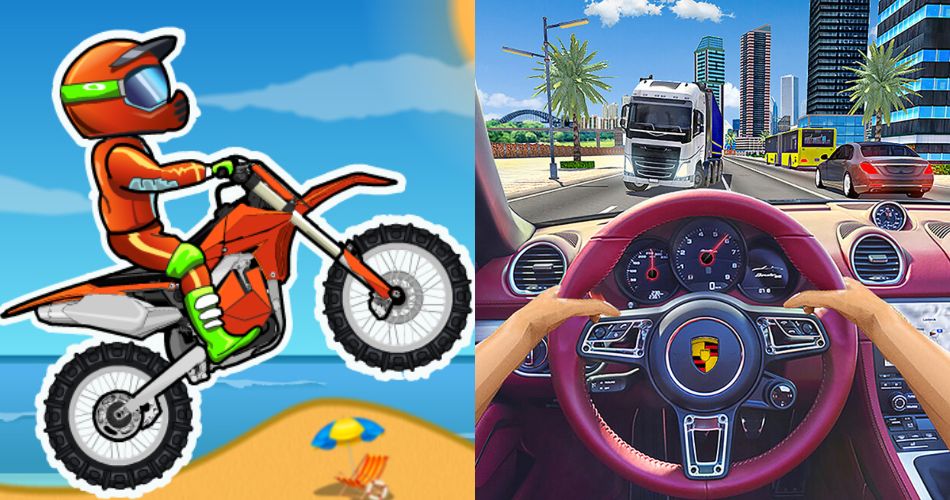

Racing games remain a reliable pillar of the casual and mid-core market because they combine instant accessibility with long-term mastery. Players can start without tutorials, yet improving steering, timing, and risk management creates lasting motivation, which is why the best free racing games continue to perform across mobile, PC, and web.
This resilience tracks with the bigger picture. Nearly 3.6 billion people will play games worldwide in 2025, and the formats that win are the ones people can jump into quickly and improve over time. Racing games deliver short sessions that still leave room for real progress
Clear performance feedback, personal bests, and competitive comparison encourage repeat play, while racing audiences tend to skew younger and highly active across digital platforms.
In the end, lasting success comes down to precise, rewarding driving more than flashy trends. That’s the lens Calvin Man, Head of Content and Monetization at GameDistribution, uses when looking at racing titles in the GD catalog. The picks below show how those principles hold up over time.
1. Longevity as Proof of Strong Core Mechanics
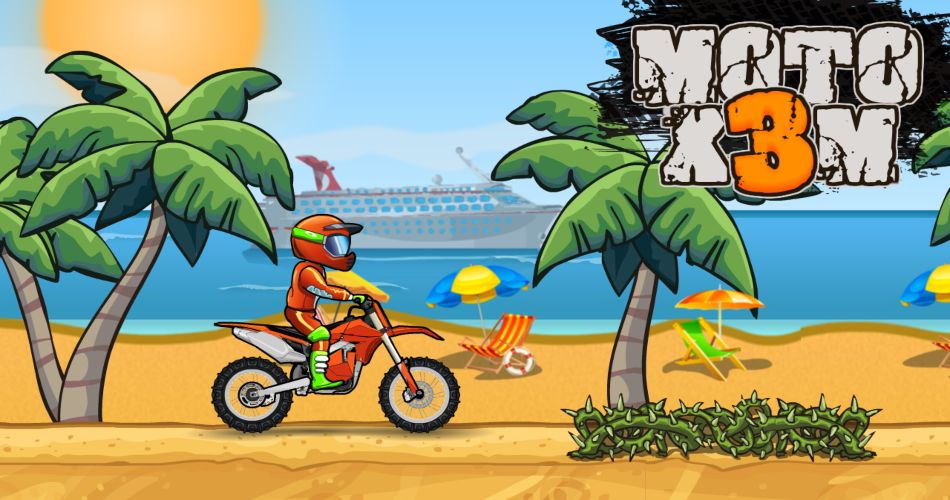
Moto X3M Bike Race Game is a Flash-era classic that still ranks among GD’s strongest racing performers. Despite receiving no major updates, players continue to return. The reason is simple: controls remain precise, physics behave consistently, and restarts happen instantly. Furthermore, momentum stays intact from one attempt to the next. As a result, learning stays continuous and frustration remains low. This is a quality often associated with the best free racing games built to last.
Each level introduces a challenge that rewards accuracy and timing rather than memorization. Progress comes from improving execution instead of unlocking systems, allowing engagement to hold up even after repeated play. This design approach places Moto X3M among the best moto racing games on the web and demonstrates how solid fundamentals can survive multiple technology cycles.
“Moto X3M is the undisputed titan of bike stunt games for a reason. The secret sauce is its frictionless restart loop. When you crash (and you will), you’re back in the action in a fraction of a second. That instant reset completely removes player frustration and creates an addictive ‘just one more attempt’ cycle.” — says Calvin Man.
While consistency supports long-term performance, session-level engagement often depends on how difficulty evolves moment to moment.
2. Difficulty Pacing as a Driver of Player Retention
Racing games tend to lose players when difficulty ramps too quickly or lacks progression altogether. Traffic Jam 3D avoids both pitfalls through deliberate tuning, particularly within car racing game formats that rely on speed and reaction.
Even as speed increases, vehicle handling remains stable. Meanwhile, the challenge escalates through denser traffic patterns and tighter margins, rather than sudden mechanical changes. This gradual escalation mirrors patterns seen in the best racing games. It naturally gives players space to adapt before truly testing their skills.
“What makes Traffic Jam 3D stand out from a design standpoint is its risk-versus-reward mechanic. You earn bonus points by shaving past oncoming bumper-to-bumper traffic as closely as possible. It forces players into a constant state of high-stakes focus, driving massive session lengths.”
Errors are clearly attributable to player decisions, not randomness. That clarity encourages retries and reinforces learning, placing Traffic Jam 3D among good racing games known for sustained session length.
3. Control Quality Over Brand Recognition
Challenge and pacing lose their impact if vehicle control lacks consistency. In racing titles, trust is built through predictable handling, particularly in street car racing, where precision and timing dominate moment-to-moment play.
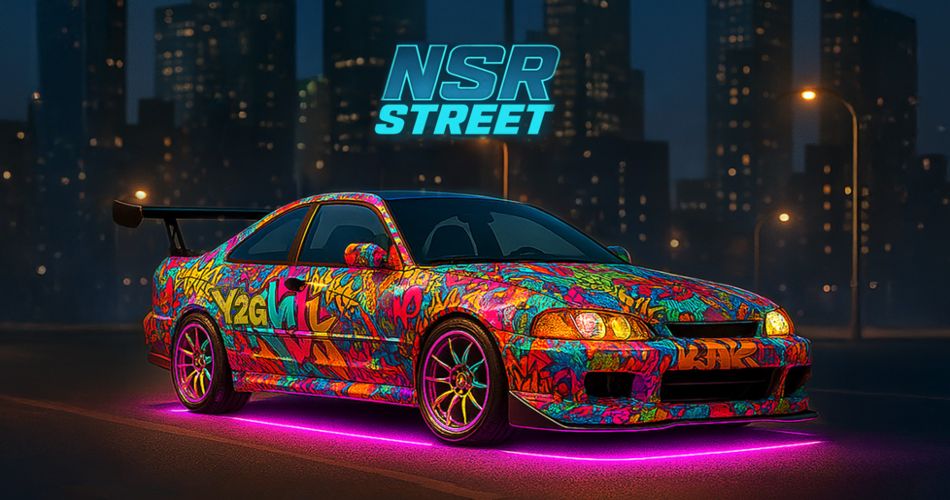
NSR Street Car Racing benefits from a recognizable IP, but its performance rests on mechanical reliability rather than brand alone. Steering input translates cleanly into movement, drifting responds proportionally, and speed changes remain readable under pressure, allowing it to stand alongside the best free racing games in its category.
“NSR brings that authentic underground street racing vibe to the browser. The developers hit a sweet spot here: high visual fidelity and deep vehicle progression, but optimized so efficiently that it loads instantly without cooking your device’s CPU.”
Customization and multiplayer expand depth without compromising control. Drifts require intent, nitro rewards timing, and outcomes stay tied to execution. The game illustrates that brand awareness only matters when the driving model supports it.
4. Retro Design Used to Reinforce Readability and Focus
Not every racing title benefits from visual density or realism. Some perform better by stripping away excess, a pattern that explains the continued appeal of certain retro racing games.
Asphalt Retro draws inspiration from classic handheld racers but prioritizes clarity over nostalgia. Track layouts remain easy to scan, progression follows a straightforward curve, and controls stay consistent as speed increases, placing it comfortably among the best racing games that emphasize readability.
“This gave me such a huge shot of 90s arcade nostalgia that I half-expected to find a quarter slot on my computer monitor. Taking Gameloft’s iconic Asphalt IP and wrapping it in a crisp, pixel-art retro style is absolute genius. It combines high-speed drifting, police chases, and arcade nitro boosts into a lightweight package that Gen Z and retro enthusiasts alike eat right up.” — highlights Calvin Man.
Visual simplicity supports decision-making rather than distracting from it. The result is an experience where attention stays on racing lines and timing, not interface interpretation.
5. Minimal Controls That Support Skill Mastery
Reducing input does not remove depth when feedback remains precise. At the hypercasual end of the spectrum, this approach still supports mastery and appears even among the best racing games focused on timing and rhythm.
Drift Boss operates on a single-input mechanic, yet every action carries consequence. Success depends on timing, anticipation, and consistency rather than reflex speed.
“Drift Boss is a masterclass in hyper-casual minimalism. By stripping driving down to a single button tap to drift right or left, literally anyone can play it instantly. Yet, the timing precision required creates a surprisingly deep skill ceiling that keeps players endlessly trying to beat their high scores.”
Progression systems extend engagement without interrupting flow. Improvement remains visible from session to session, which helps explain its performance among top free racing games.
Key Takeaways for Developers and Publishers in Racing Games
Across these examples, the defining factor is design discipline rather than genre variation. Predictable physics, readable speed, and consistent feedback establish trust, supporting both skill development and repeat play across racing games of different styles.
For developers, this clarifies where effort produces results. Input response, uninterrupted speed, and scalable difficulty matter more than feature expansion. Titles that allow players to progress at their own pace continue to perform as some of the best racing games across skill levels.
For publishers, these patterns serve as clear audience signals and an opportunity to guide behavior. Performance-driven players tend to return frequently and engage in short, repeatable sessions, making racing content highly predictable in terms of engagement. Rather than looking at games one by one, publishers benefit from focusing on curation and flow.
Clearly separating racing titles by player intent, for example, an “Easy Racing” section for quick, low-pressure play and a “Racing Pro” or “Skill Challenge” section for competitive, high-precision games, helps players immediately choose what fits their mood. When the next option is visible and one click away, audiences are far more likely to continue playing instead of leaving after a single race.
As a result, web racing games built on solid fundamentals consistently outperform trend-driven releases, especially when supported by thoughtful site structure. Players searching for the best online racing game, kart racing games, or even niche formats like motor racing board games are more likely to stay when discovery feels intentional rather than accidental. In this context, the website UX becomes part of the engagement loop.
These same design qualities also align naturally with performance-oriented audiences. Racing games centered on mastery and feedback attract players who value competition and measurable progress, fitting well alongside sports, tech, automotive, and youth-focused content.