


Launching a new HTML5 title often comes with a harsh reality check. Developers spend weeks mastering web game design, refining core mechanics late into the night. Then launch day arrives, the analytics dashboard refreshes, and the data reveals a frustrating 30-second bounce rate.
The good news? You can change this.
We have gathered the exact web game design strategies that top developers use right now to dominate the market. Ultimately, these practical tips will unlock your game’s true earning potential.
Think As a Player
Think about what you would like to see as a player. Which types of levels would be logical? What kind of challenges would you get excited about? How would you like to be rewarded when you reach a milestone? Asking yourself these questions could help you to discover potential caveats and increase the playability of your game.
To truly adopt the player’s mindset, you must also consider the pacing of your game’s difficulty curve. A sudden difficulty spike causes players to quit in frustration. Meanwhile, a completely flat difficulty curve just leads to boredom.
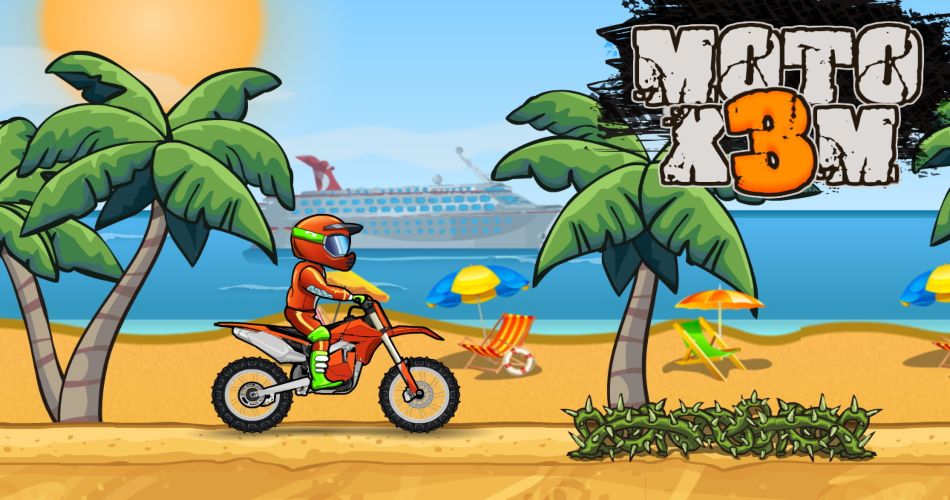
Moto X3M Bike Race Game is a perfect example of mastering the player’s perspective. The game introduces core racing physics on safe, straightforward tracks before gradually ramping up to explosive obstacle courses. It anticipates the player’s learning curve perfectly, rather than giving them an unfair punishment.
Accessibility is Key In Web Game Design
Try to keep the game accessible to everyone. Use universal symbols in the menu and during gameplay, and include a tutorial if the goal or tactics are harder to grasp for beginners.
Furthermore, accessibility in web game design means considering the diverse hardware and environments of your audience. A successful web game should ideally be responsive, scaling flawlessly between a widescreen desktop monitor and a portrait-mode smartphone screen.
Implementing flexible control schemes — such as supporting both keyboard/mouse for PC users and intuitive touch swipes for mobile users — guarantees that no player is alienated by their choice of device.
Fireboy and Watergirl 1: Forest Temple exemplifies outstanding accessibility. The game relies entirely on universal symbols (directional arrows, gems, color-coded doors) rather than heavy text, making it instantly playable across all languages. Its simple dual-character control scheme is easy to grasp visually, allowing players of any age to jump right into the level without a lengthy text tutorial.
Great Visuals Are Crucial In HTML5 Game Design

A good-looking game is more attractive to players. So it is definitely worth it to spend some extra time on the general design of the game. The characters, background, and weapons or tools, for example. If you are having a hard time designing everything yourself, you could consider purchasing an asset pack. This means you buy the images, but you can still create the game yourself.
Beyond just raw assets, a cohesive art direction is what truly makes a game memorable. It is not necessarily about having high-fidelity, resource-heavy graphics, but rather a consistent color palette, readable UI elements, and distinct character silhouettes.
When the visual language is clear, players can instantly distinguish between enemies, background elements, and interactive objects, which significantly reduces cognitive load and keeps them fully immersed in the gameplay.
Dynamons World stands out visually because of its incredibly strong, cohesive art direction. The game uses a vibrant, consistent cartoon style with highly distinct creature designs that players want to collect. The user interface is clean and visually separates the action buttons from the detailed battle backgrounds, proving that cohesive aesthetics directly elevate the perceived quality of a web game.
Thumbnails As an Invitation to Play
Adding onto the previous point, the thumbnails are the first thing potential publishers and players will see. That’s why it is important to think of what you want to show in these small images. If you are looking for tips to design a thumbnail set that really matches your game and makes it look attractive, check out the GameDistribution’s design guideline.
Keep in mind that a thumbnail is effectively your game’s storefront packaging; it needs to communicate the genre, energy, and core mechanic in a fraction of a second. High-contrast colors, clear focal points, and action-oriented framing perform significantly better than cluttered, zoomed-out screenshots.
A well-designed thumbnail sets the correct expectations, meaning the players who click are genuinely interested in the type of experience you are offering, which ultimately boosts your overall retention and playtime metrics.
The game ev.io uses thumbnails masterfully. Instead of showing chaotic, confusing gameplay footage from a distance, their promotional icons typically feature a high-quality, close-up render of a futuristic character holding a weapon against a dynamic, contrasting background. It instantly communicates “fast-paced action” to the player, attracting the exact target audience the game is built for before a single click happens.
Reward Wanted
In your game, you can choose to implement rewarded ads to maximize the revenue potential. This means that a player can choose to watch an advertisement in order to get something in return. There are many options for what to offer them: power-ups, extra lives, or bonus levels, for example. Think about what the player would like to have to succeed.
The key to a successful rewarded ad strategy is ensuring the value exchange feels fair, entirely voluntary, and seamlessly woven into the game’s core loop. Offering a score multiplier at the end of a victorious match or a crucial health refill right before a boss fight makes the advertisement feel like a helpful tool rather than a disruptive monetization tactic. Timing and placement are just as crucial as the reward itself.
Geometry Vibes 2 Online provides a perfect example of smart rewarded ad placement. In this intense rhythm-based platformer, players often crash just inches away from the finish line of a brutally difficult level. At this precise moment of high frustration and high engagement, the game offers a rewarded video in exchange for a mid-level checkpoint revive.
Because the player has invested significant effort and wants to avoid starting over, the ad serves as a high-value lifeline, intercepting them exactly when their desire to continue is at its peak.
Learn By Playing
This is definitely the tip that is the most fun for you! Check out GameDistribution’s extensive catalog or start up your favorite game and see what these developers have done to make the game interesting, smooth, accessible, and fun for their target audience. Then think about yours: can you use the same tactics? We’d love to see what you come up with.
Active analysis is very different from passive gaming. When studying other successful web games, take deliberate notes on their “first-time user experience” (FTUE). How long does it take from the loading screen to the actual gameplay? How do they hook you in the first 30 seconds?
Dissecting these mechanics shows you exactly how top games handle their progression loops. Consequently, you will quickly build a mental library of proven design patterns. As a result, you never have to waste time reinventing the wheel on your own projects.
Mastering Web Game Design: Your Next Steps
Successful web game design always starts and ends with the player’s experience. To maximize engagement, developers must prioritize frictionless onboarding, universal accessibility, and a cohesive visual identity that clearly communicates the action.
By actively anticipating the player’s learning curve and stripping away unnecessary text or complex menus, developers can secure that crucial first impression and prevent early drop-offs.
Beyond the gameplay itself, smart packaging and strategic monetization are what turn a fun game into a profitable business asset.
High-converting thumbnails attract the right target audience, while well-timed rewarded ads enhance the player journey rather than interrupting it. By continuously studying market leaders and applying these core principles, development teams can consistently build high-retention titles that thrive in a competitive ecosystem.